 111
111 2
2 3
3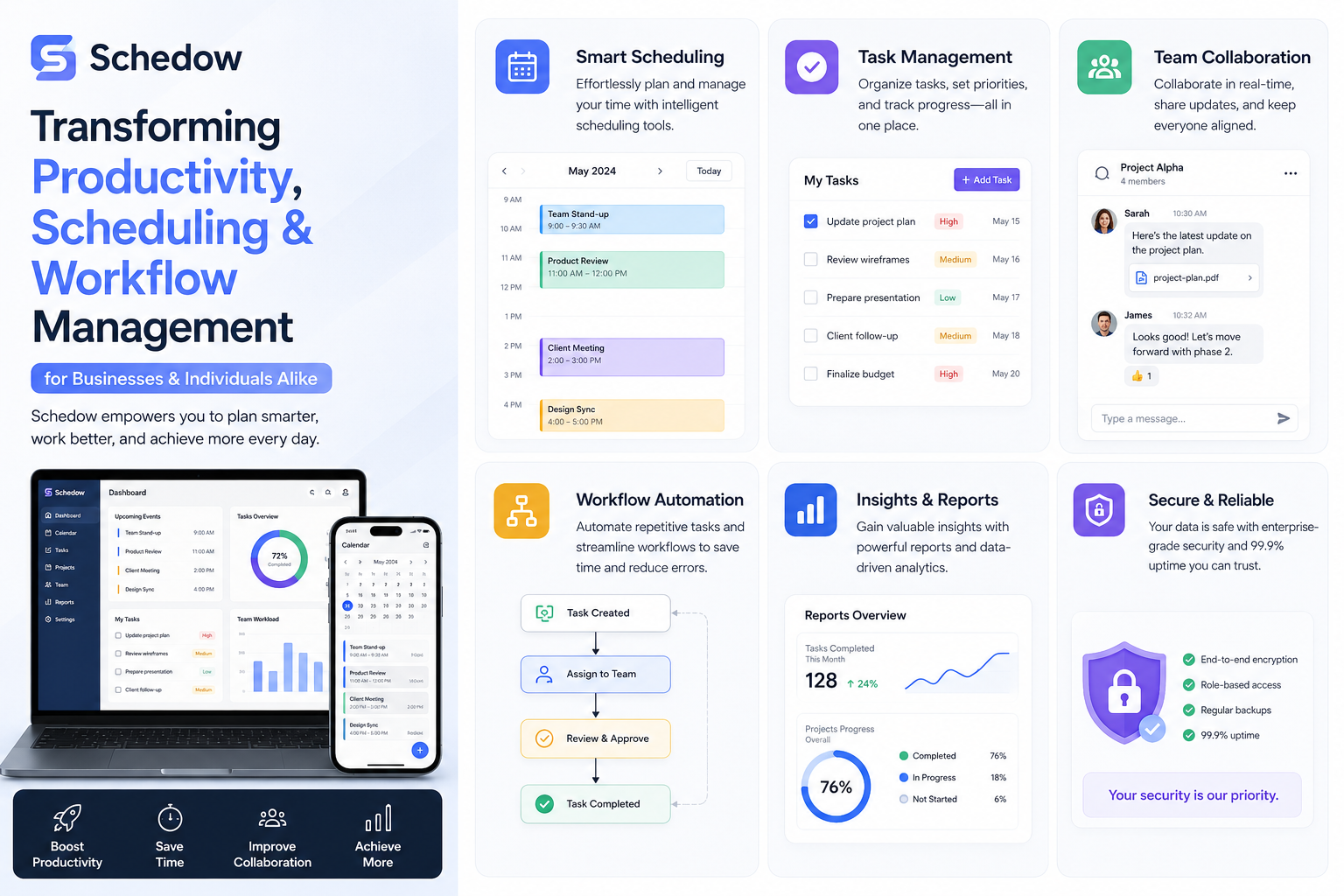
In today’s fast-moving digital world, time management has become one of the most valuable skills a person or organization can develop. Professionals juggle meetings, deadlines, projects, client communication, and personal responsibilities every single day. Amid this growing demand for organization and efficiency, platforms that simplify scheduling and workflow coordination are gaining remarkable attention. One name that has steadily emerged in conversations around productivity and planning is Schedow.
The appeal of digital scheduling systems is no longer limited to large corporations or enterprise environments. Freelancers, small businesses, educational institutions, remote teams, and even individuals now rely on smart calendar management and task coordination tools to maintain balance and productivity. The modern workplace depends heavily on systems that reduce friction, eliminate confusion, and streamline communication. This shift has created a perfect environment for innovative scheduling platforms to thrive.
Many users appreciate software solutions that combine simplicity with functionality. Rather than overwhelming users with overly technical interfaces, modern productivity tools aim to create intuitive experiences that encourage daily use. This practical philosophy is one of the reasons why interest around Schedow continues to expand among professionals looking for smarter ways to organize their schedules.
Digital planning platforms have evolved beyond simple calendar applications. They now integrate reminders, workflow tracking, appointment booking, team collaboration, analytics, and automation into one unified environment. The result is a more connected approach to work and personal management. Businesses no longer view scheduling as an administrative task alone. Instead, it has become a central pillar of operational efficiency and customer experience.
As remote work continues to influence global business culture, the need for dependable scheduling systems has increased dramatically. Virtual meetings across multiple time zones, hybrid work arrangements, and flexible work hours demand reliable coordination tools. Without an effective scheduling solution, teams often experience missed appointments, communication breakdowns, and wasted time. The growing popularity of streamlined workflow systems reflects a larger movement toward organized digital productivity.
A well-designed productivity platform does more than simply track appointments. It supports better decision-making, reduces stress, improves accountability, and creates structure in busy environments. Many professionals now recognize that proper scheduling contributes directly to better performance and healthier work-life balance. This broader understanding explains why interest in digital planning ecosystems keeps growing across industries.
“Time is the one resource you can never replace,” productivity consultant Laura Meyers once explained. “The systems people use to manage time often determine the quality of their success.”
That observation captures the importance of intelligent scheduling in modern life. Whether managing a startup team, coordinating educational programs, handling freelance clients, or organizing personal goals, reliable planning tools provide measurable value. The growing attention surrounding Schedow reflects this larger transformation in how people approach productivity, organization, and efficiency in the digital age.
Scheduling has existed in various forms for centuries, from handwritten planners and appointment books to physical calendars pinned on office walls. For many years, manual scheduling methods served businesses adequately because workflows moved at a slower pace. However, technological advancement transformed communication and accelerated professional expectations. Suddenly, organizations required faster coordination, instant updates, and real-time collaboration.
The rise of computers introduced digital calendars, which represented a major breakthrough for office productivity. Early scheduling software allowed users to store appointments electronically, send reminders, and organize tasks more efficiently than traditional paper-based systems. As internet connectivity improved, cloud-based scheduling systems began replacing isolated desktop applications.
Cloud technology completely changed how teams interact with calendars and workflow systems. Instead of maintaining separate schedules across departments, organizations could centralize planning into unified platforms accessible from anywhere. This shift proved especially valuable for distributed teams and businesses operating across multiple regions.
Modern productivity platforms evolved even further by integrating communication tools, project management systems, customer relationship management features, and automation capabilities. Scheduling became interconnected with broader operational processes rather than existing as a standalone function. Businesses recognized that time management influences nearly every aspect of organizational performance.
Digital transformation also changed user expectations. People wanted scheduling platforms that worked seamlessly across smartphones, tablets, laptops, and desktop computers. Mobile accessibility became essential as professionals increasingly relied on remote work and on-the-go communication. Convenience and synchronization emerged as defining features of modern productivity ecosystems.
The popularity of flexible work arrangements accelerated demand for smarter scheduling technology. Hybrid offices require careful coordination between remote employees and in-office teams. Appointment booking systems, meeting coordination tools, and shared availability calendars became essential components of daily operations.
The development of scheduling platforms also reflects changing workplace culture. Traditional hierarchical management structures are gradually giving way to more collaborative environments. Teams now prioritize transparency, accessibility, and communication. Shared scheduling systems support these values by helping employees coordinate responsibilities more effectively.
Another significant trend involves personalization. Users increasingly prefer systems tailored to their specific workflows and preferences. Rather than forcing everyone into rigid structures, successful scheduling platforms provide customizable options that adapt to different industries and working styles.
This evolution highlights why platforms focused on organization and productivity continue attracting attention in competitive digital markets. Efficient scheduling is no longer a luxury feature reserved for executives. It has become an everyday necessity for professionals at every level.
Productivity challenges affect nearly every profession today. Employees face overflowing inboxes, overlapping meetings, project deadlines, client expectations, and constant communication demands. Without structured organization systems, maintaining focus becomes extremely difficult.
One reason professionals value scheduling platforms is their ability to reduce mental overload. Instead of remembering every appointment manually, users can rely on automated reminders and centralized calendars. This creates mental space for strategic thinking and creative problem-solving.
Effective scheduling tools also improve accountability within teams. Shared calendars allow colleagues to understand availability, coordinate responsibilities, and avoid unnecessary conflicts. Transparency reduces confusion and helps projects progress more smoothly.
Many businesses have discovered that appointment scheduling directly affects customer satisfaction. Delayed responses, double bookings, and missed meetings create frustration for clients and damage professional credibility. Organized scheduling systems improve reliability and strengthen client relationships.
Remote work environments especially benefit from centralized planning tools. Virtual collaboration depends on precise coordination because team members may work across different time zones and schedules. Without effective scheduling systems, remote operations can quickly become disorganized.
Freelancers and independent professionals also rely heavily on structured planning tools. Managing multiple clients simultaneously requires careful organization. Missed deadlines or scheduling mistakes can lead to financial consequences and damaged reputations. Reliable digital systems help freelancers maintain professionalism and efficiency.
Educational institutions increasingly use scheduling platforms for course planning, student appointments, faculty meetings, and administrative coordination. Healthcare providers rely on organized appointment systems to improve patient management and operational efficiency. Event planners use digital scheduling tools to coordinate vendors, venues, and timelines.
The widespread adoption of scheduling technology reflects its practical impact on daily operations. Time management influences productivity, stress levels, collaboration quality, and overall organizational performance. Businesses that embrace efficient planning systems often gain measurable competitive advantages.
Modern scheduling solutions also support data analysis and optimization. Organizations can track meeting patterns, appointment trends, workflow efficiency, and resource allocation. These insights help leaders make informed decisions about staffing, productivity strategies, and operational improvements.
Another advantage involves scalability. As businesses grow, manual coordination becomes increasingly difficult. Digital scheduling systems allow organizations to expand operations without losing structure or efficiency. This scalability makes productivity platforms valuable investments for growing companies.
The increasing complexity of modern work environments explains why scheduling technology continues evolving rapidly. Professionals need systems capable of adapting to changing workflows, communication habits, and operational demands.
Not all scheduling platforms deliver the same value. The most successful systems share several important characteristics that improve usability, efficiency, and user satisfaction. Understanding these features helps explain why certain productivity platforms attract loyal users.
A clean and intuitive interface remains one of the most important elements of effective scheduling software. Users prefer platforms that simplify organization rather than complicate it. Easy navigation encourages consistent engagement and reduces learning curves for new users.
Cross-platform synchronization is another essential feature. Professionals often switch between devices throughout the day, moving from smartphones to laptops and tablets. Seamless synchronization ensures schedules remain accurate and updated regardless of device.
Automated reminders significantly improve reliability. Missed meetings and forgotten deadlines create unnecessary stress and inefficiency. Notification systems help users stay informed and prepared without constant manual monitoring.
Team collaboration features are especially important in modern workplaces. Shared calendars, group scheduling, availability tracking, and meeting coordination tools improve communication and reduce administrative friction.
Integration capabilities also play a major role in user satisfaction. Businesses rely on multiple software platforms simultaneously, including email systems, project management applications, customer databases, and communication tools. Effective scheduling systems integrate smoothly with broader digital ecosystems.
Customization options enhance flexibility for diverse industries and working styles. Some professionals require color-coded task organization, while others prioritize appointment booking automation or project tracking features. Adaptable systems appeal to wider audiences because they support unique workflows.
Security and privacy remain critical considerations for organizations handling sensitive information. Reliable scheduling platforms prioritize encrypted data protection, secure login systems, and privacy controls that protect both business and personal information.
Analytics and reporting capabilities provide additional value for businesses seeking performance insights. Tracking scheduling trends, appointment completion rates, and workflow patterns supports better strategic planning and operational optimization.
Mobile responsiveness has become increasingly important in recent years. Many professionals manage schedules while traveling, attending meetings, or working remotely. Responsive mobile functionality improves accessibility and convenience.
The following table highlights core features commonly associated with high-quality scheduling systems and their practical benefits.
| Feature | Primary Benefit | Professional Impact |
|---|---|---|
| Shared Calendars | Team visibility | Improved coordination |
| Automated Reminders | Reduced missed meetings | Better reliability |
| Mobile Access | On-the-go management | Greater flexibility |
| Workflow Integration | Centralized operations | Increased efficiency |
| Appointment Booking | Simplified client scheduling | Enhanced customer experience |
| Analytics Dashboard | Productivity insights | Smarter decision-making |
| Time Zone Support | Global coordination | Easier remote collaboration |
| Task Synchronization | Organized workflows | Improved productivity |
These features collectively contribute to better organizational performance and user satisfaction. As professional environments continue evolving, scheduling platforms must adapt to increasingly sophisticated expectations.
The growing interest surrounding Schedow aligns closely with broader trends shaping the productivity software industry. Modern users seek platforms that combine simplicity, efficiency, flexibility, and accessibility in a single environment.
One important trend involves minimalism in software design. Users increasingly reject cluttered systems filled with unnecessary complexity. Instead, they prefer interfaces that prioritize usability and streamlined workflows. Clean design improves engagement because users can focus on tasks rather than navigating complicated menus.
Another significant trend is the integration of productivity tools into everyday routines. Scheduling systems are no longer isolated utilities used occasionally. They now function as central hubs connecting communication, planning, collaboration, and workflow management.
The rise of hybrid work environments has also transformed scheduling expectations. Organizations require systems capable of coordinating office meetings, remote collaboration sessions, client appointments, and project timelines simultaneously. Flexibility has become essential rather than optional.
Professionals increasingly value automation features that eliminate repetitive administrative work. Automated reminders, recurring scheduling templates, smart notifications, and streamlined booking processes save time and reduce errors.
Data accessibility represents another major trend. Users want instant access to schedules, tasks, and updates from virtually anywhere. Cloud-based systems support this demand by enabling real-time synchronization across devices and locations.
Customization continues influencing platform popularity as well. Businesses operate differently depending on industry, size, and organizational culture. Adaptable systems that accommodate diverse workflows often attract stronger long-term engagement.
Many users also prioritize work-life balance when selecting productivity tools. Effective scheduling systems help individuals organize personal and professional responsibilities more efficiently. Better organization contributes to reduced stress and improved time management.
The increasing importance of digital collaboration further explains the relevance of modern scheduling platforms. Teams require centralized systems that encourage communication, visibility, and accountability without creating unnecessary administrative burdens.
Industry experts frequently emphasize that productivity technology should simplify life rather than complicate it. “The best systems disappear into the background,” organizational strategist Daniel Carter once remarked. “When tools work naturally, people focus more on meaningful work and less on managing logistics.”
This philosophy resonates strongly within the evolving productivity landscape. People want systems that feel supportive rather than overwhelming. The appeal surrounding platforms like Schedow reflects this broader shift toward practical, user-focused digital organization.
Efficient scheduling directly influences organizational productivity. Companies that manage time effectively often outperform competitors struggling with coordination challenges and communication breakdowns.
One major benefit involves reducing wasted time. Employees frequently lose valuable hours navigating scheduling conflicts, searching for information, or managing unnecessary meetings. Centralized planning systems streamline coordination and improve operational flow.
Meeting efficiency improves significantly when teams share clear visibility into schedules and availability. Coordinated calendars reduce double bookings, eliminate confusion, and encourage better preparation for collaborative discussions.
Scheduling systems also improve project management by helping teams organize deadlines, milestones, and responsibilities more effectively. Clear timelines support accountability and prevent important tasks from slipping through organizational gaps.
Businesses increasingly recognize that poor scheduling affects employee morale. Constant interruptions, disorganized meetings, and unpredictable workloads contribute to stress and burnout. Structured planning systems create more stable and manageable work environments.
Customer-facing industries especially benefit from organized scheduling solutions. Appointment accuracy, timely communication, and efficient service delivery strengthen client trust and satisfaction. Reliable scheduling contributes directly to professional reputation.
Healthcare organizations provide a strong example of scheduling importance. Efficient appointment management improves patient experiences while optimizing staff allocation and resource utilization. Educational institutions similarly rely on organized scheduling for classroom management, academic coordination, and administrative operations.
Remote collaboration introduces additional complexity that effective scheduling systems help resolve. Teams working across time zones require visibility into availability and deadlines to maintain smooth communication and productivity.
Modern organizations also use scheduling data to identify inefficiencies and improve strategic planning. Analytics reveal patterns related to workload distribution, meeting frequency, resource allocation, and operational bottlenecks.
The psychological benefits of organization should not be underestimated either. Structured schedules reduce uncertainty and help individuals feel more in control of their responsibilities. This improved clarity often leads to better focus and stronger overall performance.
Workplace efficiency depends heavily on communication quality, coordination, and time management. Scheduling systems support these foundational elements by creating centralized structures that improve visibility and reduce friction across operations.
Technology adoption depends heavily on user experience. Even highly advanced software can fail if users find it confusing, frustrating, or unnecessarily complicated. This reality has shaped the development philosophy behind many modern productivity platforms.
People generally prefer tools that feel intuitive from the beginning. Complex onboarding processes and cluttered interfaces discourage engagement, especially among busy professionals who need immediate functionality.
Design simplicity does not mean limited capability. Successful scheduling systems balance powerful features with accessible interfaces. Users should be able to navigate workflows naturally without requiring extensive technical training.
Consistency across devices also influences satisfaction. Professionals expect mobile and desktop experiences to feel connected and reliable. Synchronization problems or inconsistent interfaces quickly reduce trust in productivity tools.
Visual organization plays an important role in usability as well. Clear layouts, color coding, structured task categories, and readable calendars help users process information more efficiently.
Customization enhances user experience by allowing individuals and teams to adapt platforms according to their preferences. Flexible notification settings, workflow structures, and display options improve comfort and long-term engagement.
Speed and reliability remain essential components of positive user experience. Delayed loading times, synchronization failures, or technical glitches create frustration and interrupt productivity. Reliable performance encourages daily dependence on scheduling systems.
Accessibility considerations are increasingly important in software development. Inclusive design ensures productivity tools remain usable for diverse audiences with varying needs and preferences.
Another key factor involves reducing cognitive overload. The most effective systems simplify decision-making rather than adding layers of complexity. Clear scheduling visibility and organized task management help users focus on priorities more effectively.
User-centered design reflects a broader understanding that productivity tools should support human behavior rather than force rigid adaptation. Platforms that align naturally with everyday workflows often achieve stronger adoption and user loyalty.
Remote work has permanently reshaped professional culture around the world. Organizations increasingly embrace distributed teams, hybrid offices, and flexible scheduling arrangements. This transformation has elevated the importance of digital coordination systems.
Traditional office environments relied heavily on face-to-face interaction and physical proximity for communication. Remote collaboration requires more deliberate coordination because team members may work from different locations, time zones, and schedules.
Scheduling systems help bridge these communication gaps by centralizing availability, meetings, project timelines, and workflow updates. Shared calendars create visibility that supports smoother collaboration across distributed teams.
Time zone coordination represents one of the most significant challenges for global organizations. Without effective scheduling systems, arranging meetings across regions can become extremely difficult. Modern productivity platforms simplify this process by displaying localized availability and preventing conflicts.
Remote work also increases dependence on virtual meetings. Organized scheduling systems ensure teams coordinate effectively without overwhelming employees with unnecessary calls and interruptions.
Flexibility has become a defining feature of modern work culture. Employees increasingly value the ability to structure work around personal responsibilities and peak productivity periods. Scheduling platforms support this flexibility while maintaining organizational coordination.
Businesses that embrace remote collaboration often discover unexpected productivity benefits. Reduced commuting time, improved autonomy, and access to global talent pools contribute to operational advantages. However, these benefits depend heavily on effective digital organization.
Collaboration tools integrated within scheduling systems improve communication flow and reduce fragmentation between platforms. Centralized coordination helps teams stay aligned despite physical distance.
The remote work movement also highlights the importance of work-life balance. Flexible scheduling allows professionals to manage responsibilities more sustainably. Structured planning systems help maintain boundaries and prevent burnout in always-connected digital environments.
Many experts believe remote and hybrid work models will remain permanent components of professional culture moving forward. This long-term shift ensures continued demand for reliable scheduling and productivity technology.
Workflow optimization has become a major strategic focus for organizations across industries. Companies recognize that inefficient processes waste time, increase costs, and reduce employee satisfaction.
Scheduling systems play a central role in workflow optimization because they influence communication, coordination, resource allocation, and project management simultaneously. Organized workflows improve consistency and operational clarity.
Businesses often struggle with fragmented communication systems that create confusion and duplication. Centralized scheduling platforms reduce fragmentation by consolidating important planning information into accessible environments.
Operational efficiency also affects profitability. Missed appointments, delayed projects, and scheduling conflicts generate financial consequences for many organizations. Streamlined coordination reduces these risks while improving productivity.
Customer experience represents another important factor. Businesses that manage appointments and communication efficiently create stronger impressions and improve client retention. Organized scheduling contributes directly to professional credibility.
Scalability further explains why workflow optimization matters. Growing organizations require systems capable of supporting larger teams and more complex operations without sacrificing coordination quality.
Managers increasingly use productivity analytics to identify inefficiencies and improve organizational performance. Scheduling data provides valuable insights into workload patterns, meeting frequency, and resource utilization.
Employee satisfaction benefits from optimized workflows as well. Clear expectations, organized schedules, and manageable workloads reduce stress while improving morale and engagement.
Technology continues reshaping workflow expectations across industries. Businesses that adapt effectively often gain competitive advantages through faster response times, stronger organization, and better communication.
Workflow optimization ultimately reflects a broader commitment to operational excellence. Scheduling systems serve as foundational infrastructure supporting productivity, accountability, and collaboration in modern professional environments.
The future of scheduling technology will likely involve even deeper integration between productivity systems, communication platforms, and workflow management environments. Digital organization continues evolving rapidly as professional expectations change.
Artificial intelligence and predictive analytics are already influencing scheduling development. Future systems may provide increasingly sophisticated recommendations related to meeting optimization, workload management, and time allocation.
Voice-based scheduling assistance may also become more common as users seek faster and more natural interaction methods. Smart assistants integrated into productivity ecosystems could simplify calendar management significantly.
Personalization will likely remain a major priority moving forward. Users increasingly expect systems tailored to their habits, workflows, and preferences. Adaptive interfaces may become more responsive to individual behavior patterns over time.
Cybersecurity and privacy protection will continue growing in importance as organizations rely more heavily on cloud-based productivity systems. Secure infrastructure and transparent data practices will remain essential for user trust.
Cross-platform interoperability is expected to improve as businesses seek unified digital ecosystems. Seamless integration between scheduling, communication, finance, project management, and customer service systems will enhance operational efficiency.
Remote and hybrid work trends will also influence future scheduling innovations. Flexible collaboration tools capable of supporting global teams will remain highly valuable across industries.
Wellness-oriented productivity features may become increasingly common as organizations prioritize employee well-being alongside performance. Balanced scheduling systems could help users manage workloads more sustainably.
Industry specialists often emphasize that future productivity technology should focus on supporting human creativity rather than increasing digital overwhelm. Systems that reduce friction while preserving simplicity will likely achieve the strongest adoption.
“The future of work depends on clarity, flexibility, and intelligent coordination,” business strategist Melissa Grant observed during a workplace innovation conference. “Technology succeeds when it helps people focus on meaningful priorities.”
This perspective reflects broader trends shaping modern productivity culture. Effective scheduling technology should enhance organization without creating additional stress or complexity.
As digital transformation continues influencing every industry, scheduling platforms will remain central to professional productivity and collaboration strategies. Their role extends far beyond appointment management into the broader architecture of modern work itself.
The growing attention surrounding Schedow reflects larger changes taking place across the professional world. Businesses, freelancers, educational institutions, healthcare providers, and remote teams increasingly depend on reliable digital scheduling systems to maintain organization and productivity.
Modern work environments move faster than ever before. Communication happens instantly, projects evolve continuously, and teams often collaborate across multiple locations and time zones. In this landscape, efficient scheduling is no longer optional. It has become essential infrastructure supporting operational success.
Digital productivity platforms improve coordination, reduce stress, strengthen accountability, and streamline workflows. They help organizations manage complexity while creating more structured and manageable environments for employees and clients alike.
The evolution of scheduling technology also reflects changing expectations around flexibility, accessibility, and user experience. People want systems that simplify life rather than add unnecessary friction. Successful platforms prioritize usability, integration, and adaptability while supporting diverse workflows and working styles.
As remote collaboration and hybrid work models continue shaping global business culture, the demand for dependable scheduling systems will likely keep growing. Organizations that invest in effective digital organization tools often gain measurable advantages in efficiency, communication, and customer satisfaction.
The broader productivity movement is ultimately about more than calendars and appointments. It represents a shift toward intentional time management, smarter collaboration, and better operational clarity. Platforms like Schedow symbolize this transformation by highlighting the growing importance of structured digital organization in modern life.
Professionals across industries increasingly recognize that effective scheduling supports both performance and well-being. Organized systems reduce uncertainty, improve focus, and create space for meaningful work. In an era defined by constant activity and rapid communication, the value of clarity and coordination cannot be overstated.
Schedow is commonly associated with digital scheduling, workflow organization, and productivity management. It reflects the broader demand for efficient planning systems that help professionals and organizations manage appointments, collaboration, and time-sensitive tasks more effectively.
Scheduling platforms improve operational efficiency by reducing conflicts, organizing workflows, streamlining communication, and improving accountability. Businesses use these systems to coordinate meetings, manage appointments, optimize resources, and strengthen customer experiences.
Remote teams rely on scheduling systems to coordinate across different locations and time zones. Shared calendars, automated reminders, and centralized planning tools help maintain communication and improve collaboration without requiring physical office presence.
Well-organized scheduling systems often reduce stress by improving clarity and minimizing confusion. Employees can manage workloads more effectively when schedules, deadlines, and responsibilities are clearly structured and accessible.
Effective scheduling platforms usually include shared calendars, mobile accessibility, automated reminders, workflow integration, collaboration tools, analytics dashboards, and customizable settings. These features improve usability and operational efficiency.
The rise of remote work, hybrid offices, flexible schedules, and digital collaboration has increased demand for reliable scheduling technology. Businesses and individuals now depend more heavily on organized planning systems to maintain productivity and communication.
Schedow reflects the larger movement toward streamlined digital organization and smarter workflow management. Modern professionals increasingly value systems that simplify coordination, improve efficiency, and support balanced productivity across personal and professional responsibilities.